MEDICAL DEVICE REGULATION

Jun 10, 2024

Authorisation of NON-STERILE implants remains in place, traceability is also given here.

Non-sterile packaged implants remain approved, however the widespread assumption that exact traceability is only guaranteed through sterile packaged implants. The MDR‘s transitory provisions are governed by the amending regulation (EU) 2023/607. Furthermore, the MDR does not require individual packaging of small surgical products. This means that previously used non-sterile packaged surgical kits and operation sets will remain available for continued use. The Federal Ministry of Health responded, „I can answer your enquir y as to whether Germany is planning to introduce regulations that would mean implantable products (especially small surgical implants such as screws, plates, and nails) must be suppl ied in sterile individual packaging with a clear „No!“.

“Federal Ministry of Health.

What you need to know

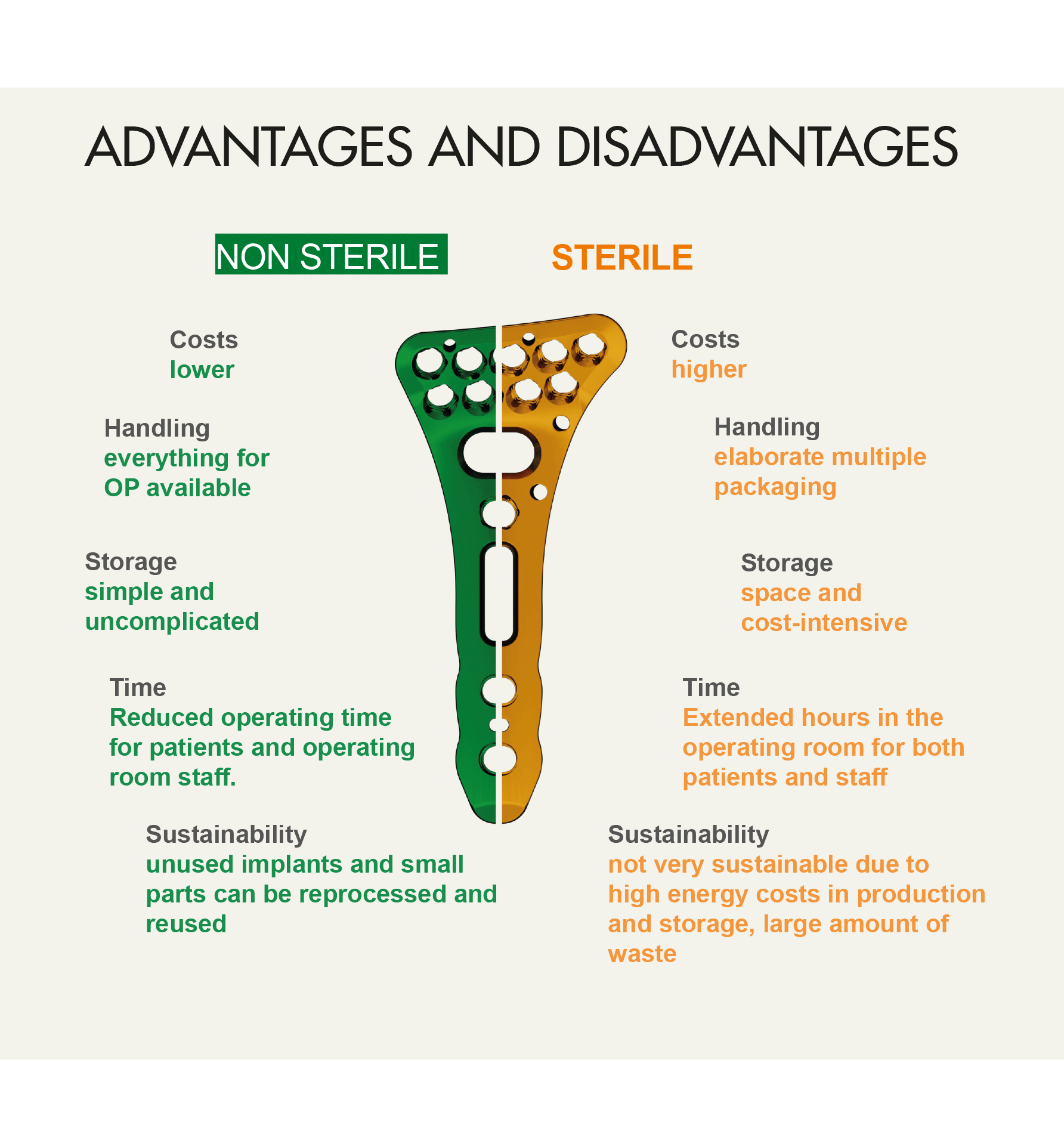
The advantages and disadvantages of non-sterile and sterile packaged implants

Non-sterile packaged implants offer numerous advantages. They are more cost-effective to manufacture, store and use. In contrast to sterile-packed implants, which have to undergo a more complex and energy-intensive external sterilization process, non-sterile-packed implants are more flexible to use.
Advantages and Disadvantages

Make the right decision

Sterile-packed implants require more energy, packaging materials, and generate more waste. The increased consumption of resources has both financial and environmental consequences. Non-sterile surgical kits are a cost-effective and environmentally friendly alternative. Consider these benefits to make an informed decision that balances financial and environmental concerns.
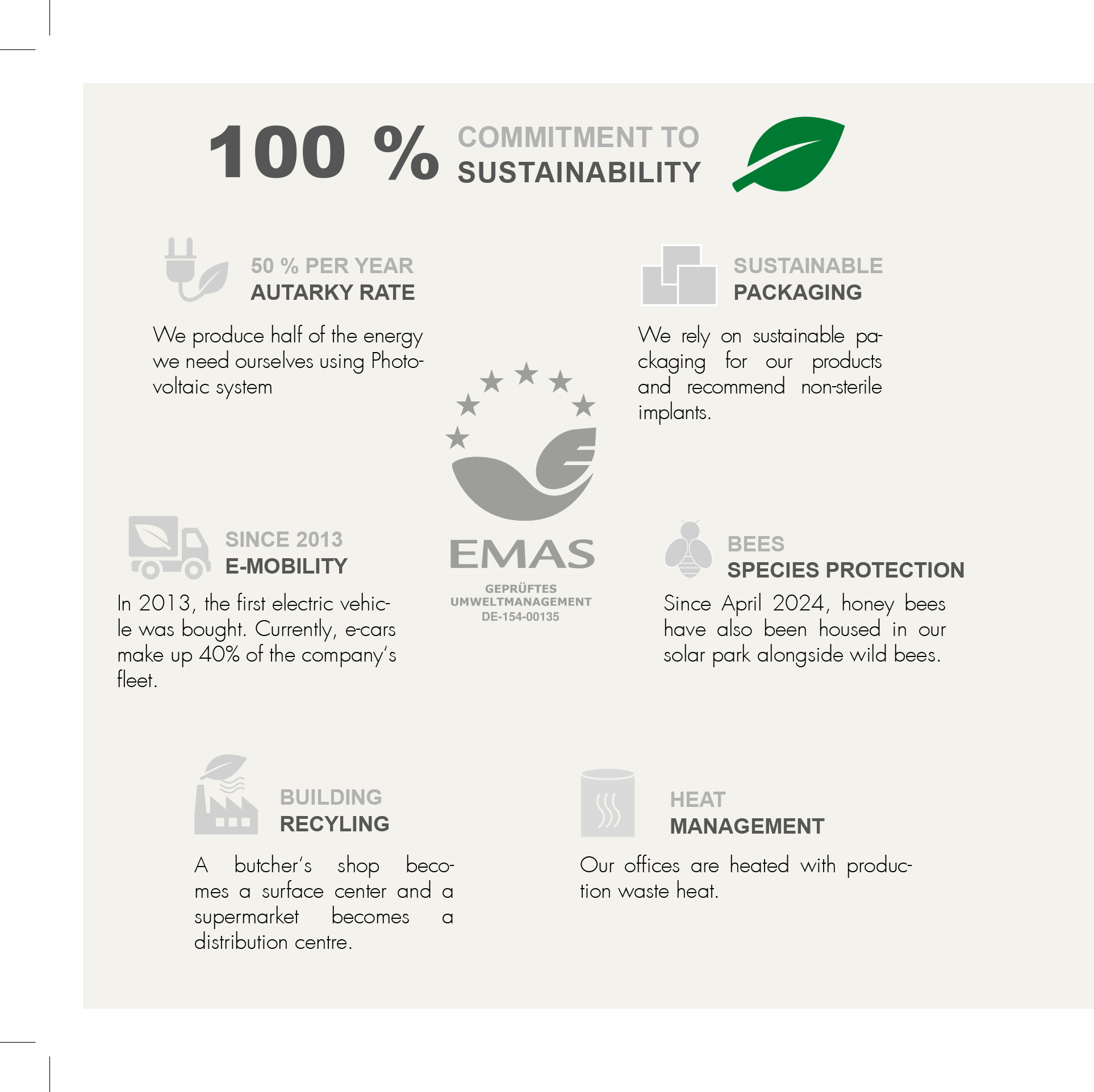
Commitment to sustainability
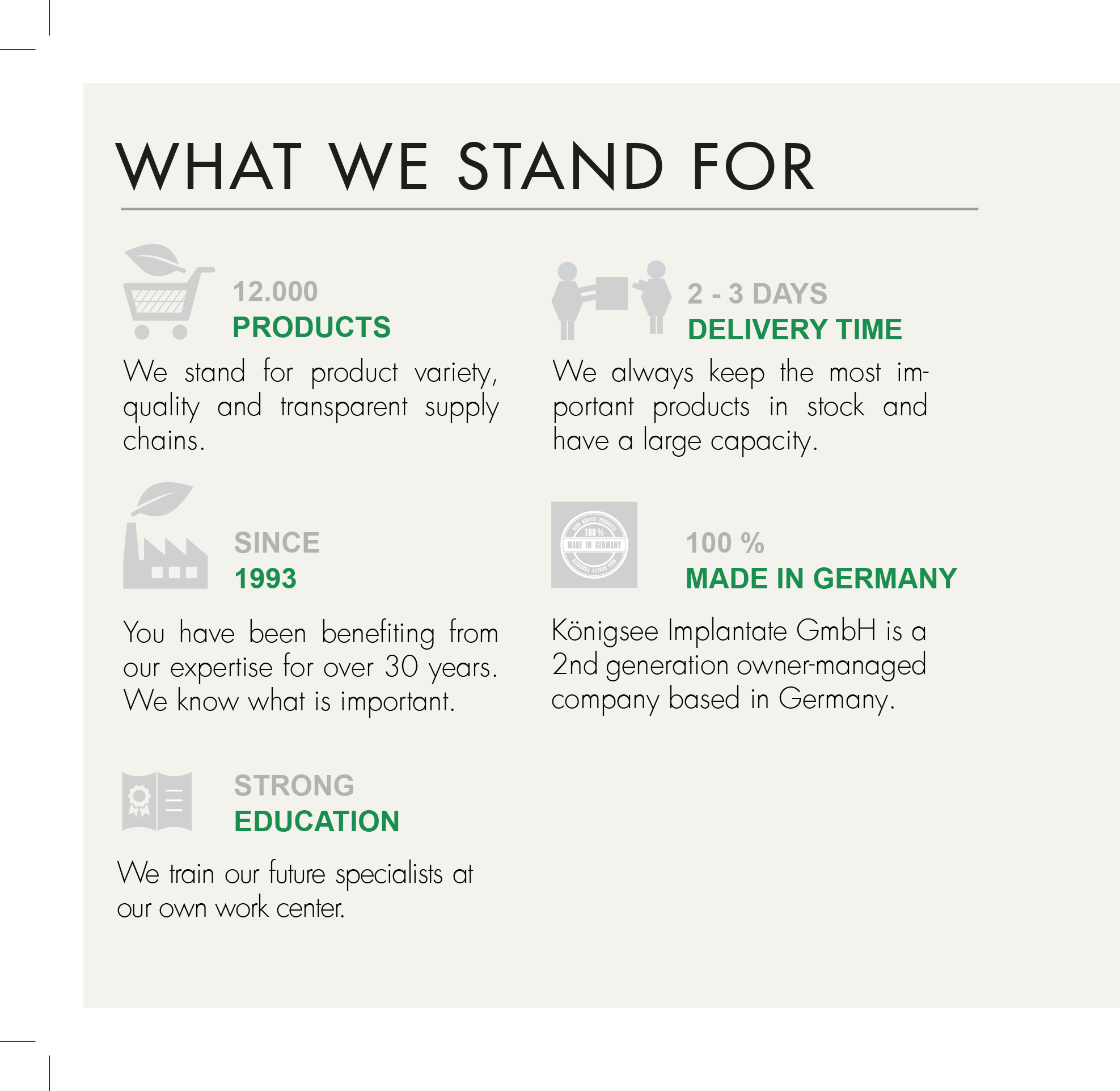
What we stand for