
TISTM SCREW
Transiliosacral and pelvic screw
TIS™ SCREW FOR TREATING THE POSTERIOR PELVIC RING
The TIS™ transiliosacral screw was designed to treat the posterior pelvic ring.
The transiliosacral screw fixation process starts long before the screw is inserted: with the assessment of the fracture, intraoperative imaging and selecting the appropriate screw trajectory through the sacrum.
TIS™ AT A GLANCE

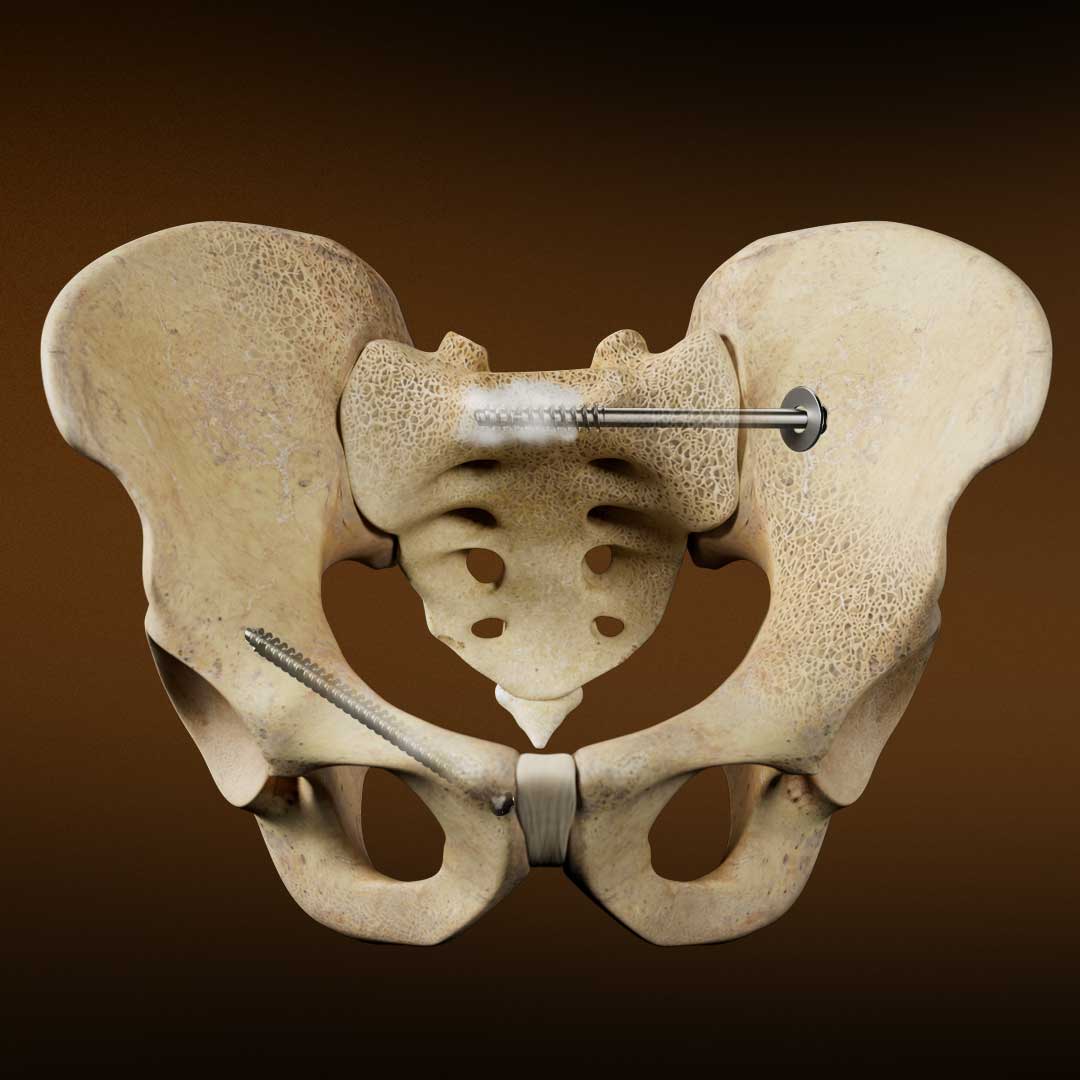
AUGMENTABLE
Fenestrated versions
can be augmented
with bone cement.
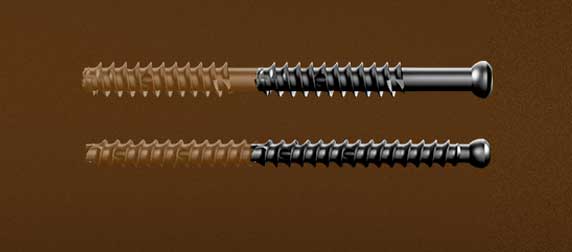
FULLY THREADED OR PARTIALLY THREADED
A variety of thread designs
to meet different
anchoring requirements.
WITH OR WITHOUT
WASHER
The washer can be used
as needed to expand the system’s capabilities.
ANTEGRADE OR RETROGRADE
Different screw
trajectories within a single system.
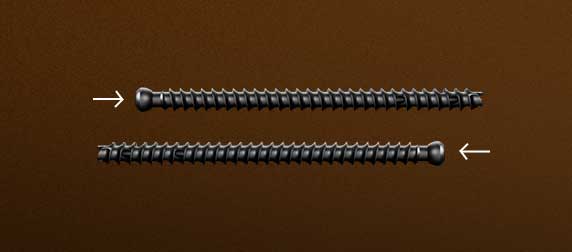
STANDARD
OR EXTENDED LENGTH
A comprehensive range of screws
to suit different anatomical
requirements.
THE SCREW FOLLOWS THE KIRSCHNER WIRE.
Anchoring begins with the Kirschner wire, not the screw.
The entry point, angle and path determine the subsequent screw trajectory. The orientation within the sacrum provides the foundation for further implantation.
Video excerpt: interview with Prof. Böhme.
A LONG PATH THROUGH THE SACRUM.
Complex anatomy cannot be assessed from a single perspective.
Inlet, outlet, and lateral projections are used to plan the screw trajectory. The path through the sacrum is created step by step.
DEEPEN YOUR EXPERTISE. TRY OUT TECHNIQUES.
From imaging to screw trajectory selection and implantation: The hands-on workshop provides an opportunity to practice transiliosacral screw fixation on Thiel-fixed specimens under realistic conditions.

Chief Physician PD Dr. med. habil. Jörg Böhme
Klinikum St. Georg gGmbH, Leipzig

Senior Physician PD Dr. med. habil. Andreas Höch
Universitätsklinikum Leipzig
HANDS-ON TRAINING FOR TRANSILIOSACRAL SCREW FIXATION AND AUGMENTATION.
WHEN IMAGE QUALITY BECOMES A CHALLENGE.
Anatomical structures are not always clearly identifiable.
Anatomy, soft tissue shadows and reduced bone quality increase the need for effective orientation along the screw trajectory.
Interview with Dr. Höch
A SINGLE SYSTEM FOR A WIDE RANGE OF SITUATIONS.
Not every treatment follows the same path. TIS™ provides a variety of screw designs, lengths and options to meet the specific requirements of transiliosacral screw fixation.
1. SCREW TRAJECTORY
Antegrade or retrograde
The TIS™ screw can be inserted antegrade or retrograde depending on the patient’s anatomy and treatment plan.

Antegrade

Retrograde
2. ANCHORING
Fully threaded or partially threaded
Compression or stable fixation. Thread designs to suit different treatment goals.

Fully threaded

Partially threaded
3. CONTACT SURFACE
With or without washer
The washer can be used as needed to expand the system’s capabilities.

With washer

Without washer
4. BONE QUALITY
Augmentation as needed
Bone cement can be used to augment the anchoring of the TIS™ screw in patients with reduced bone quality.

WHEN AUGMENTATION
BECOMES AN ISSUE.
Fenestrated TIS™ screws can be augmented with bone cement. The SPASY cement application system can be used for the controlled application of bone cement.

A SINGLE SYSTEM.
FROM IMPLANT
TO INSTRUMENTS.
Further product information
Reliability in the OR
Production in Germany

Development, manufacturing and quality assurance take place at our site in Germany. Close proximity between departments enables fast response times.
Fast delivery

In-stock items are typically shipped within 24 hours of order receipt.
Reliable supply

Coordinated forecasting and framework agreements help ensure the reliable availability of implants and instruments.
TIS™ SCREW and the environment
Carbon footprint of the raw material
Carbon footprint
Smaller carbon footprint than standard
Carbon footprint without energy independence
Total footprint – including material extraction, processing, all transportation,
implant manufacturing at Königsee Implantate and delivery
Made in Germany. For more than 30 years.
For more than 30 years, we have been developing and manufacturing implants and instruments for surgery and trauma orthopaedics at our site in Thuringia.
Close proximity between development, manufacturing and logistics enables fast response times and direct points of contact.
Thanks to forward-looking material stockpiling of up to two years, implants and instruments can be reliably supplied – made in Germany and usually shipped within one day.
